Most students quote the Inspector's final speech as evidence that Priestley believed in social responsibility. True — but stated like that, it's a Grade 5 point. The examiner already knows Priestley's politics. What earns marks is explaining how the speech's own structure enacts the argument it's making, not just naming the argument.
Here's the difference in practice.
"We are members of one body. We are responsible for each other."
The weaker version: "This quote shows Priestley believes society should look after each other. This links to the theme of social responsibility." True, but generic — this sentence could be written by someone who hadn't read the play closely.
The Grade 9 version: the metaphor "one body" recasts society as a single organism in which harming one part damages the whole — a direct rebuttal of Mr Birling's opening claim that "a man has to mind his own business and look after himself." Priestley structures the play so that the Inspector's collectivist metaphor arrives only after we've watched, scene by scene, exactly how Eva Smith's exploitation by each Birling in turn was never an isolated event but a single connected chain — which means the "one body" image isn't abstract moralising, it's the literal shape of the plot we just witnessed, stated as a thesis.
That's the move worth stealing: connect the quote's imagery back to the play's structure, not just its "message." Priestley doesn't just tell the audience that society is interconnected — he built an entire plot to demonstrate it first, then hands the Inspector the line that names what we already watched happen.
The Inspector's closing warning — "if men will not learn that lesson, then they will be taught it in fire and blood and anguish" — extends this further: written and performed in 1945 but set in 1912, the line lets a post-war audience hear a prophecy of two world wars inside a pre-war character's mouth, collapsing the gap between the play's setting and its audience's lived history in a way that a script written and set in the same year simply couldn't achieve.
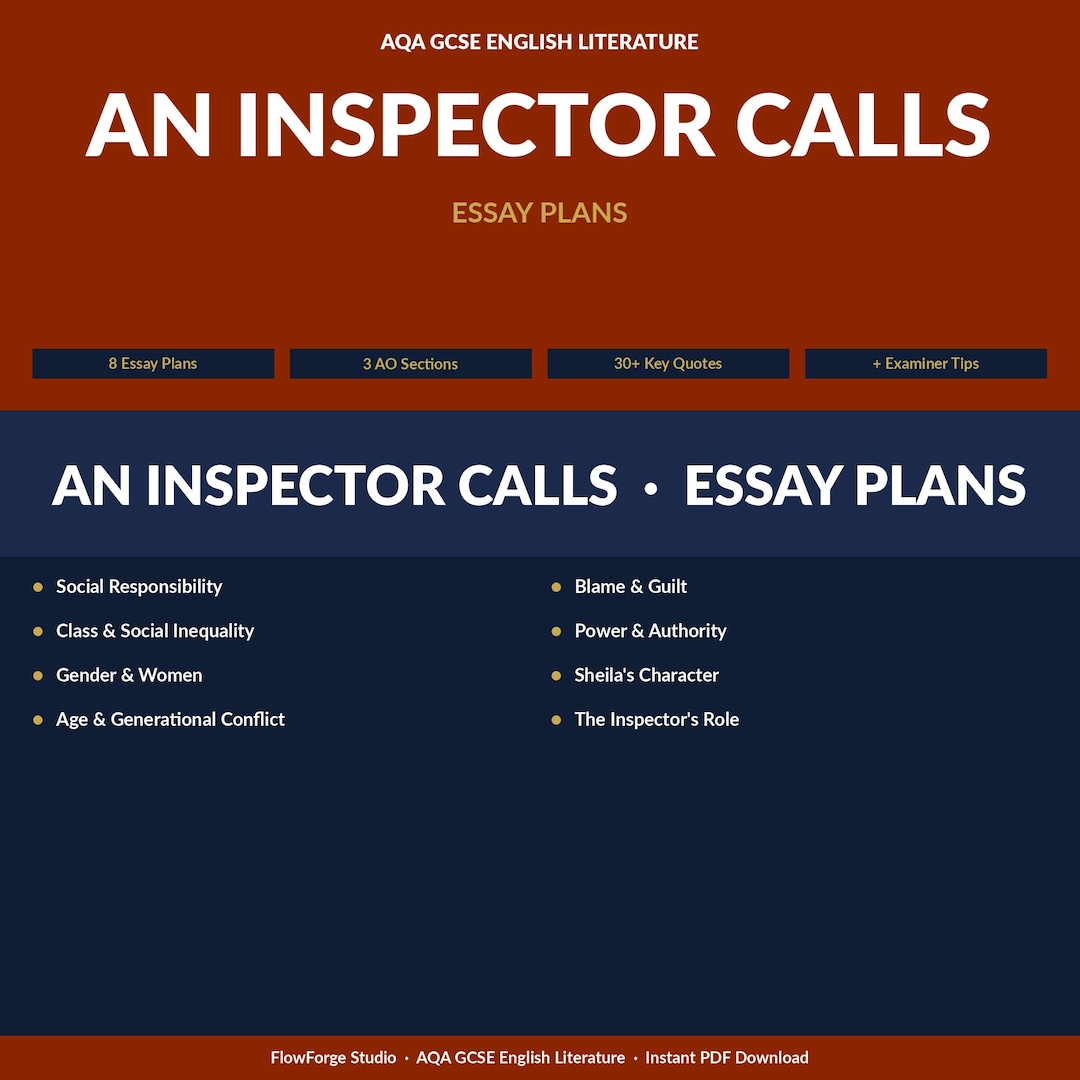
The GCSE An Inspector Calls Essay Plans — AQA, Grade 9 model answers.
That's one speech, worked at the level examiners are actually looking for. The full guide applies the same structure-first method across every major AIC essay question — responsibility, class, gender, the Inspector as a dramatic device, and the play's use of dramatic irony — each with the same plot-to-imagery link and a fully worked model paragraph.
If seeing "one body" tied back to the plot changed how you'd read the Inspector's speeches, the rest of the guide is built to make that instinct automatic.
See the full An Inspector Calls Essay Plans
Want every theme built to Grade 9 standard?
View on Etsy